
After a Record Wet Summer, Your Sprinkler System Needs a Checkup. Here Is Why.
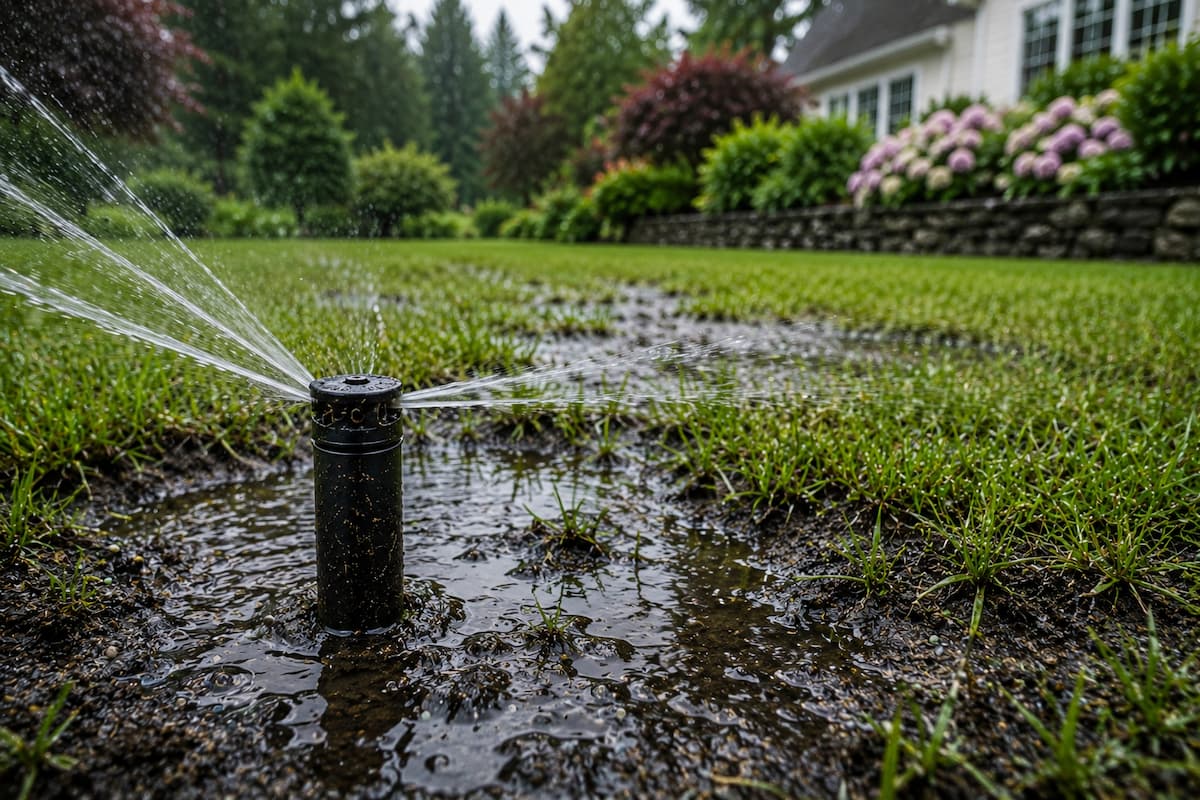
Most homeowners assume a wet summer is easy on a sprinkler system. The system runs less, so it wears less. That logic misses what actually happens to underground pipe, heads, valves, and controllers during months of saturated ground and repeated flash flooding.
“Summer 2026 wasn’t just a wet summer. It was historic. Bridgeport saw more than 21 inches of rain from June through late August, and across Westchester and Fairfield County we had storms dropping inches of rain in a matter of hours. That much water, that consistently, has a real impact on your lawn and the soil underneath it.” —Pasquale Falco
Here is what that did to irrigation systems across both counties, and what to look for before the season ends.
If Your System Ran on Schedule Through the Rain, It Caused Damage
This is the most common problem we see, and the easiest to fix.
A basic timer-based controller does not know it rained. It runs the program it was given in May. Through a summer where four out of ten days brought rain, that meant thousands of gallons of water added to soil that was already saturated. The results show up as yellowing turf, fungal disease, root rot, and washed-out mulch beds.
“If your irrigation system has a rain sensor, don’t assume it’s working just because it’s there. The cork discs inside wear out over time, and we also see sensors installed under eaves or trees where they never get enough rain to trigger. If you haven’t tested yours in a few years, now is a good time to make sure it’s actually shutting the system off when it should.” —Pasquale Falco
The better fix is a weather-based smart controller. The Hunter Hydrawise systems we install pull local forecast and rainfall data and adjust or skip cycles on their own. Through a summer like this one, a Hydrawise controller would have suspended most scheduled runs automatically. If your system does not have this capability, our irrigation system team can retrofit a smart controller onto most existing systems without replacing pipe or heads.
Saturated Soil Shifts Pipe and Heads
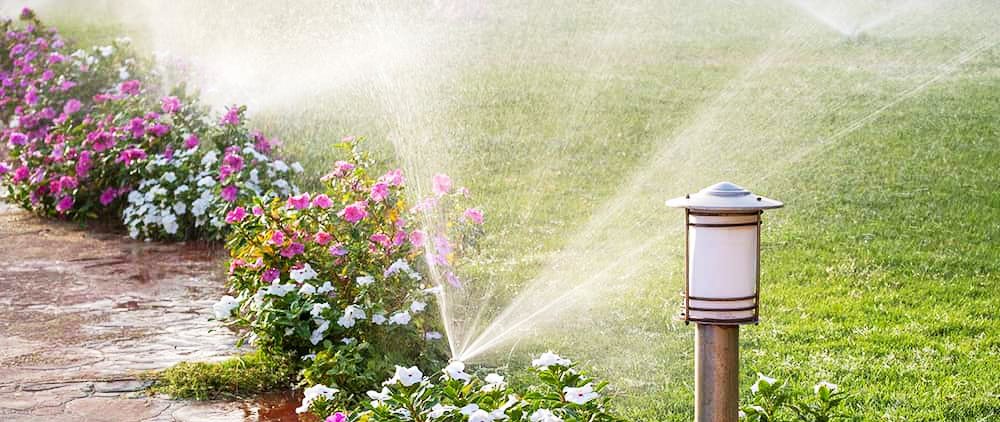
“Sprinkler heads are installed at grade, but your property is always changing. After a summer like this, with weeks of saturated soil, the ground can settle and shift. Heads that were perfectly flush in June may now be sitting too high, where a mower can hit them, or too low, where grass blocks the spray. This is exactly why getting the installation right for your specific property matters. Proper placement, grading, drainage and head selection all play a role in how well that system performs when conditions aren’t perfect.” —Pasquale Falco
Poly pipe and PVC lateral lines can shift as well, especially in the sandy soils closer to Long Island Sound and in areas where fill was used during construction. A pipe that settles unevenly puts stress on its fittings. The leak may not show up until spring startup, when the system is pressurized for the first time.
Walk your lawn and look at each head. Any head that is tilted, buried, or sitting above grade should be flagged.
Debris and Silt Clog Nozzles and Valves
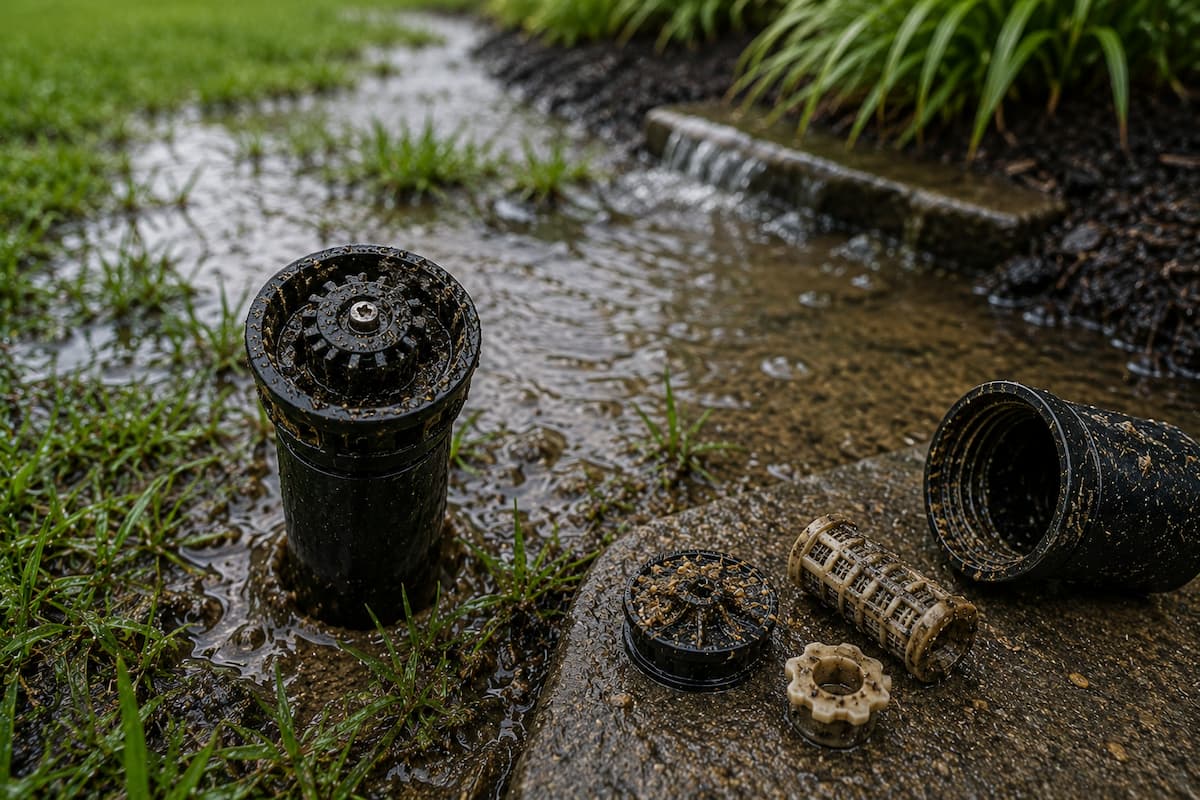
Flash flooding moves soil. Water running across a lawn carries silt, sand, and organic debris. Some of that ends up inside sprinkler heads when the pop-up retracts and pulls surface water down with it. Rotor heads are especially prone to this because their internal gears are sensitive to grit.
Silt also collects in valve boxes. A valve box that filled with muddy water during a storm may now have debris sitting on the diaphragm inside the valve. That causes valves to stick open, stick closed, or weep continuously. If one zone is running when it should not be, or a zone will not shut off completely, a fouled valve is the likely cause.
Low Spots and Drainage Tell You Where the Problems Are
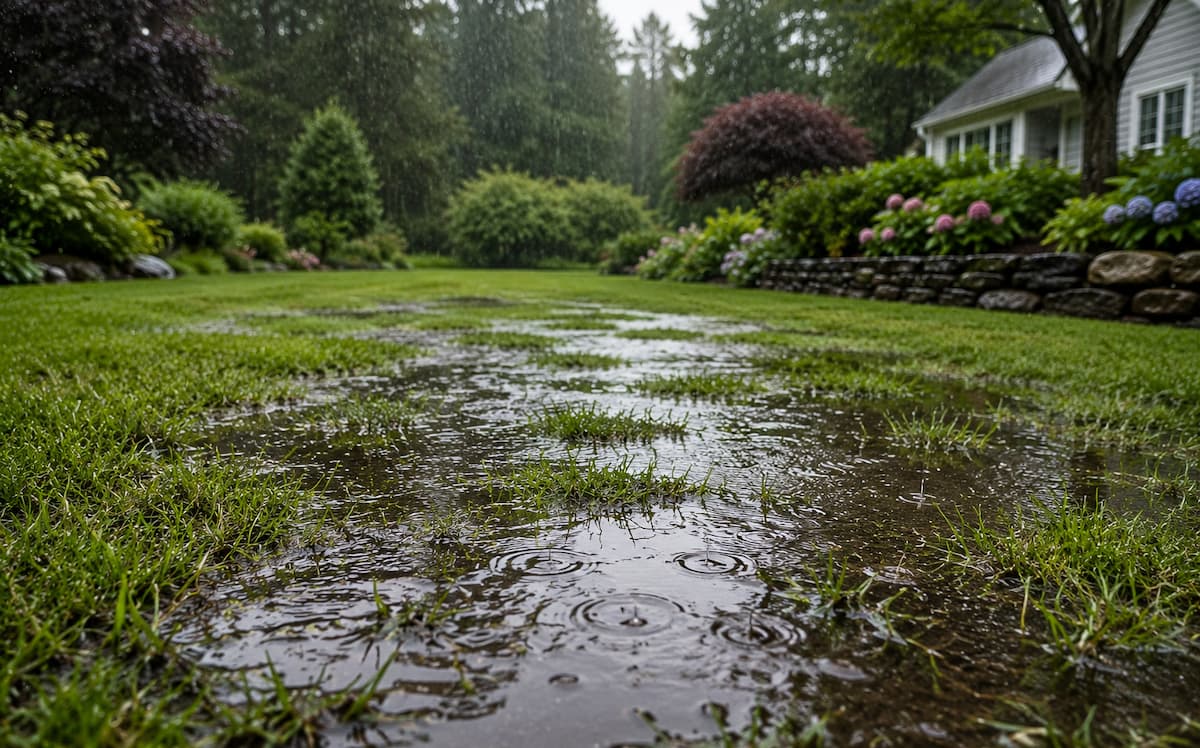
Water that pools in the same spot after every storm is either a grading problem or a sign that a sprinkler line or head is leaking underground. The two look similar from above. The difference is timing. Rain-related pooling drains within a day or two once the storms stop. A leak keeps the spot wet regardless of weather.
If a section of lawn stayed soggy through the dry stretch in late August, have it checked. Our lawn sprinkler repair technicians can pressure test individual zones and locate leaks without digging up the whole area.
For pooling that is purely a drainage issue, the fix is separate from the irrigation system. Our drainage solutions team installs French drains, dry wells, and channel drains that route water away from low areas and foundations.
Lightning and Power Surges Damaged Controllers
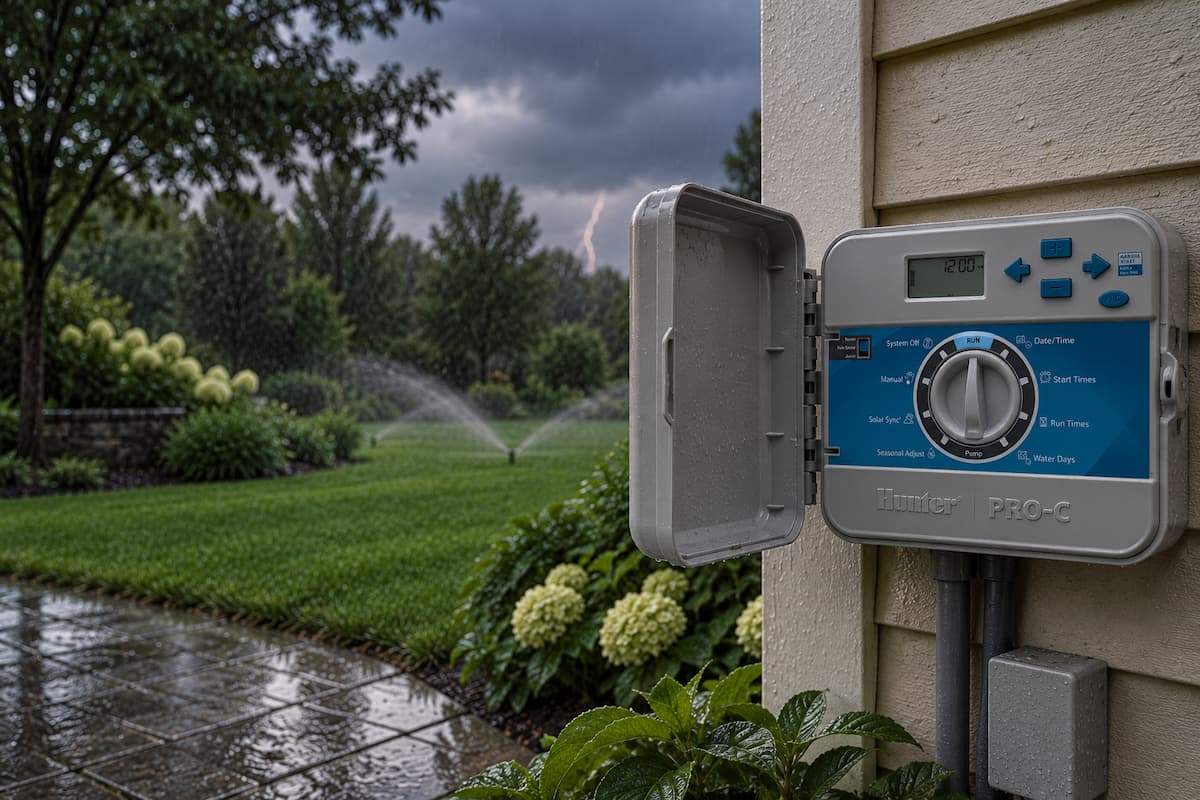
This summer brought severe thunderstorms along with the rain, including damaging wind events in Fairfield County on August 7 and August 13. Lightning does not have to strike your house to damage an irrigation controller. A nearby strike induces voltage in the valve wires running through your yard, and that surge travels back to the controller.
Signs of surge damage include a controller that shows a blank display, a zone that stopped responding, or a system that runs erratically. Sometimes only one station output on the controller board is burned out, which is easy to miss until that zone fails. If your controller behaved strangely after any storm this summer, it should be inspected. We offer surge protection as part of our service plans for exactly this reason.
Your Backflow Preventer May Have Been Submerged
Backflow prevention devices protect your household water supply from contamination. Most are installed above grade near the point of connection to the water main. If floodwater rose high enough to submerge the device, contaminated water can enter the assembly through the relief valve or test cocks.
Westchester County and Connecticut both require annual backflow testing by a certified tester. If your device was underwater at any point this summer, do not wait for your annual test date. Have it tested now.
Reset Your Schedule for Fall
Even if nothing broke, your system should not be running its summer program in September. Cool-season grass needs less water as temperatures drop, and the soil across both counties is still holding more moisture than usual. A fall schedule typically means fewer days per week and shorter run times, with adjustments for any newly seeded areas that need light daily water until germination.
A smart controller handles this on its own. A basic timer needs to be reprogrammed by hand. Either way, this is worth doing now rather than letting the system run on autopilot until it is winterized.
Plan Your Winterization Early
Sprinkler winterization in our area typically runs from mid-October through November. After a summer like this one, we recommend scheduling early. Any water left in the lines from a leak or a stuck valve will freeze and crack pipe over the winter. A blowout done properly clears every zone, but it works best when the system is in good repair going in. Booking a fall inspection and winterization together lets us catch and fix problems in one visit.
The Bottom Line
A record wet summer does not spare your irrigation system. It hides problems that will surface at spring startup, when repair schedules are full and lawns are ready to grow. A fall inspection now is the cheaper option.
Falco Lawn Sprinklers has installed, repaired, and maintained irrigation systems across Westchester County and Fairfield County for more than 20 years. Contact us or call (914) 287-2049 to schedule a fall system check.