A Record Wet Summer: What All That Rain Did to Your Lawn in Westchester and Fairfield County
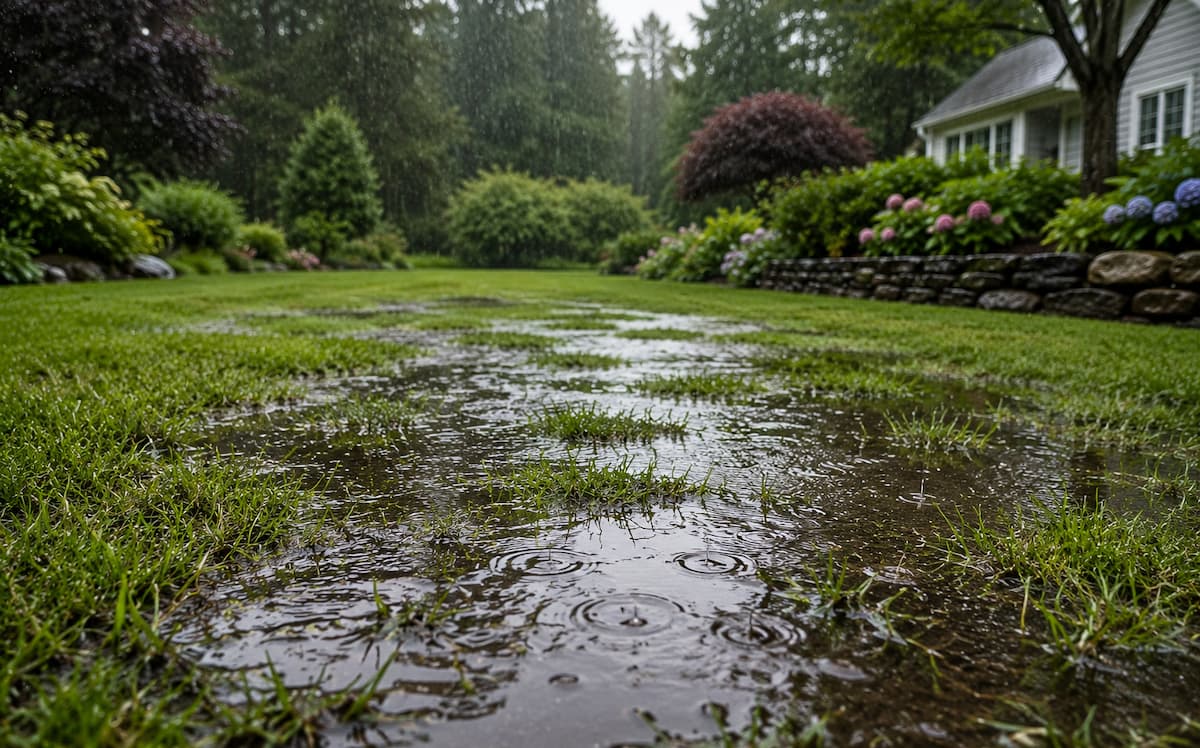
If your lawn looks tired, patchy, or strangely yellow after a summer of nonstop storms, you are not imagining it. Summer 2026 will go into the books as one of the wettest on record for our region.
Bridgeport passed 21 inches of rain between June 1 and August 23, according to the National Weather Service. That broke a record that had stood since 1972. Central Park finished the season at nearly 17 inches, about three and a half inches above normal, and roughly four out of every ten summer days brought measurable rain. Westchester saw flood warnings along the Bronx River in July and overnight totals of one to four inches during the late July storms.
That much water changes how grass grows. Here is what happened underground and above it, and what to do about it now that fall is here.
Your grass roots got lazy
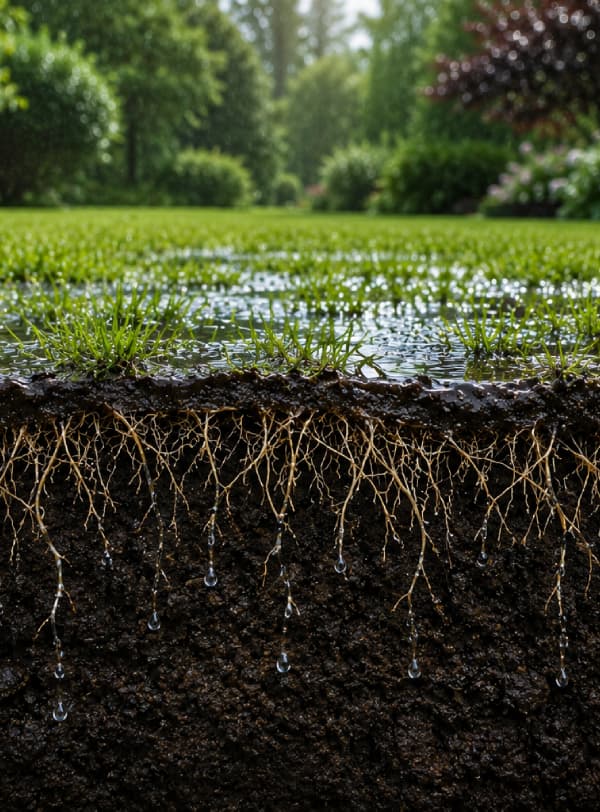
Grass roots grow toward water. In a normal summer, the soil dries between rains and roots push deeper to find moisture. That deep root system is what carries a lawn through August heat.
“The top few inches of soil never really dried out this summer. Roots had no reason to go deep, so they didn’t. A shallow-rooted lawn looks fine as long as the rain keeps coming. The minute we get a dry stretch in September or October, those lawns are going to show stress a lot faster than people expect,” said Pasquale Falco, owner of Falco Lawn Sprinklers.
Saturated soil starves roots of oxygen
Roots need air as much as they need water. Healthy soil holds both in small pockets between particles. When rain falls faster than the ground can drain, water fills those pockets and pushes the air out.
“Most of Westchester and Fairfield County sits on heavy glacial soil with a lot of clay in it. It drains slowly on a good day. After a summer like this one, a lot of lawns spent weeks with their root zones underwater. When grass turns yellow, thins out, and pulls up with almost no effort, that’s the roots rotting,” said Pasquale Falco, owner of Falco Lawn Sprinklers.
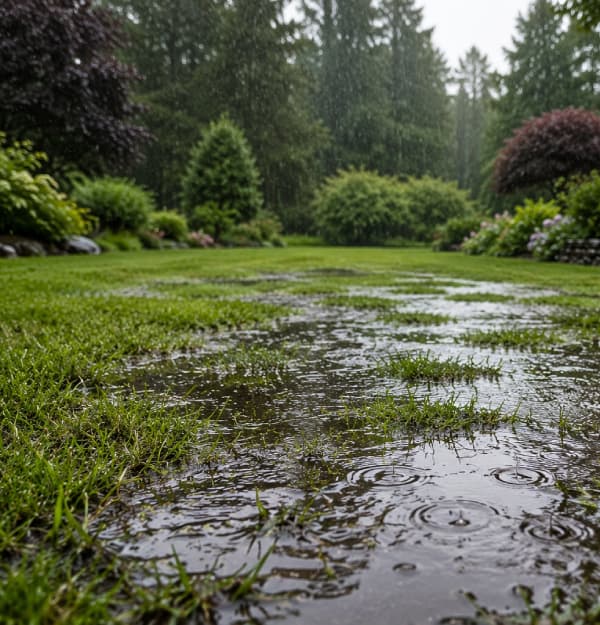
Low spots and areas near downspouts took the worst of it. If you have a section of lawn that stayed soggy for days after each storm, that section probably needs more than a fall feeding to recover.
Nutrients washed away
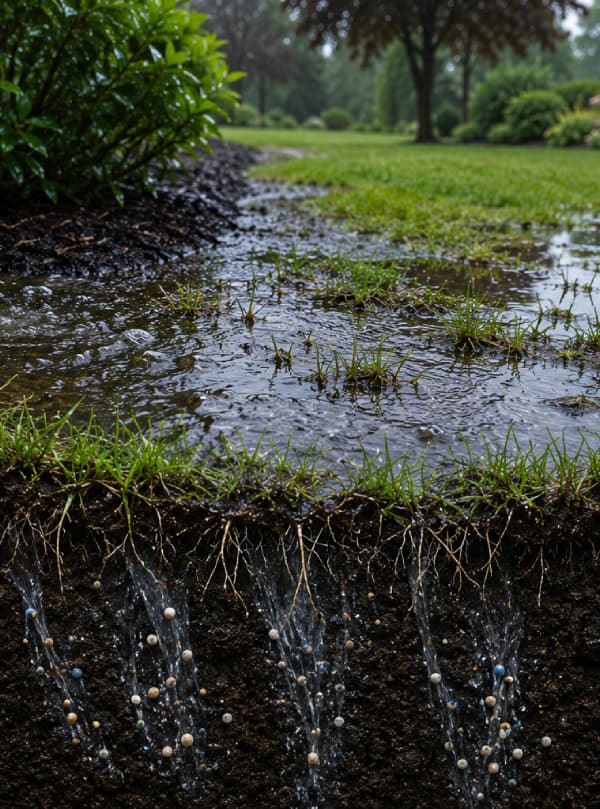
Nitrogen is the nutrient that keeps grass green and growing. It is also highly soluble. Every heavy rain pushed nitrogen down past the root zone and into the groundwater, where your grass cannot reach it.
That is why so many lawns went pale in late July and August despite all the water. The grass was not thirsty. It was hungry. Any fertilizer applied in spring or early summer was likely gone by the second week of July.
Weeds found openings
Thin, stressed turf invites weeds. Nutsedge loves wet soil and spreads by underground tubers, which is why pulling it rarely works. Crabgrass often gets a late flush in wet Augusts. Moss takes hold wherever grass thinned out in shade.
Fungus had a perfect season
Warm nights, high humidity, and grass blades that stayed wet for 12 hours or more create ideal conditions for lawn disease. This summer delivered all three for weeks at a time.
The most common problems we are seeing in the area:
- Brown patch appears as circular tan or brown areas, often with a darker ring at the edge. It thrives when nighttime temperatures stay above 68 degrees and grass stays wet overnight. Tall fescue and perennial ryegrass are especially vulnerable.
- Gray leaf spot hits perennial ryegrass hard in late summer and can look like drought damage even when the soil is wet.
- Pythium blight shows up as greasy, matted patches that spread fast in hot, wet weather. It often follows water flow patterns across the lawn.
- Dollar spot produces small straw-colored spots about the size of a silver dollar. It is a sign of low nitrogen combined with wet conditions, which describes most lawns right now.
A wet summer also brings mushrooms and slime mold. Neither hurts the grass directly. They feed on decaying organic matter in the soil and disappear when conditions dry out.
What to do this fall
The good news is that early fall is the best window of the year to repair cool-season lawns in our climate. Soil is warm, air is cooler, and the grasses that grow here, including Kentucky bluegrass, tall fescue, and perennial ryegrass, recover quickly in September and early October.
Aerate. Core aeration pulls plugs out of the soil and opens channels for air and water. After a summer of saturation and compaction, this is the single most useful thing you can do. It also helps the soil drain better ahead of next year’s storms.
Overseed. Aeration and overseeding go together. Spread seed immediately after aerating so it falls into the holes. Choose a blend suited to your sun exposure. Mid-September through early October is the target window for both counties.
Feed the roots. Apply a fall fertilizer with adequate nitrogen to replace what washed out. A second application in late October or early November, sometimes called a winterizer, builds root reserves for spring.
Test your soil. Heavy rain can lower soil pH by leaching calcium and magnesium. A simple soil test through Cornell Cooperative Extension of Westchester or UConn’s soil lab tells you whether lime is needed. Fall is the right time to apply it.
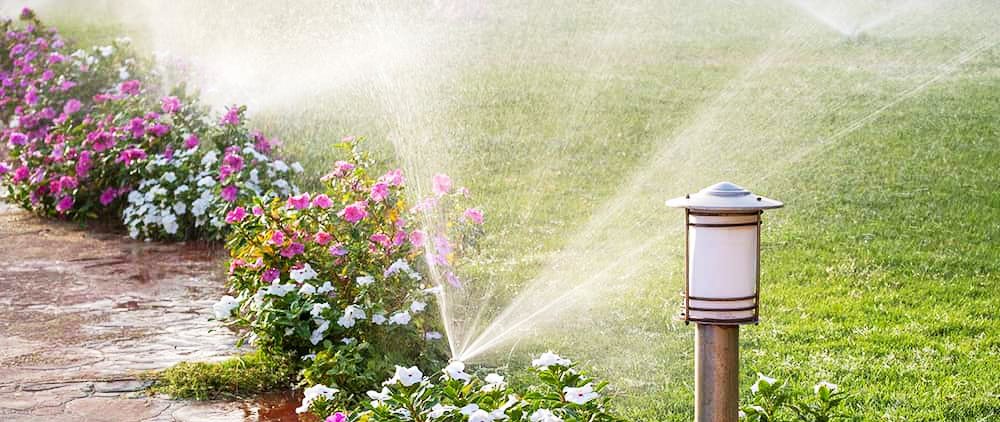
Adjust your watering. This is the step most homeowners get wrong after a wet summer. Newly seeded areas need light, frequent water until germination. Established turf needs the opposite. Let the soil dry between waterings so roots are forced to grow deeper. A smart irrigation controller like the Hunter Hydrawise systems we install handles this automatically by reading local weather data and skipping cycles when the ground is already wet. If your system is still running a summer schedule on top of the rain we have had, it is working against your lawn. Our lawn sprinkler repair team can recalibrate your zones and controller for fall conditions.
Fix the drainage. If parts of your lawn stayed underwater for days at a time this summer, no amount of seed and fertilizer will fix that permanently. Standing water is a grading or drainage problem. Our drainage solutions team designs French drains, dry wells, and catch basins that move water away from the areas where it collects. Fall is the ideal time to do this work, before the ground freezes and before spring rains arrive.
Looking ahead
One wet summer does not ruin a lawn. It does expose weaknesses that were already there: compacted soil, shallow roots, poor drainage, and irrigation schedules set once and never adjusted. Fall is when you correct those.
Falco Lawn Sprinklers has served homeowners across Westchester County and Fairfield County for more than two decades. If your irrigation system needs a fall adjustment, or your property needs a drainage plan before next season, contact us or call (914) 287-2049 for a free estimate.