
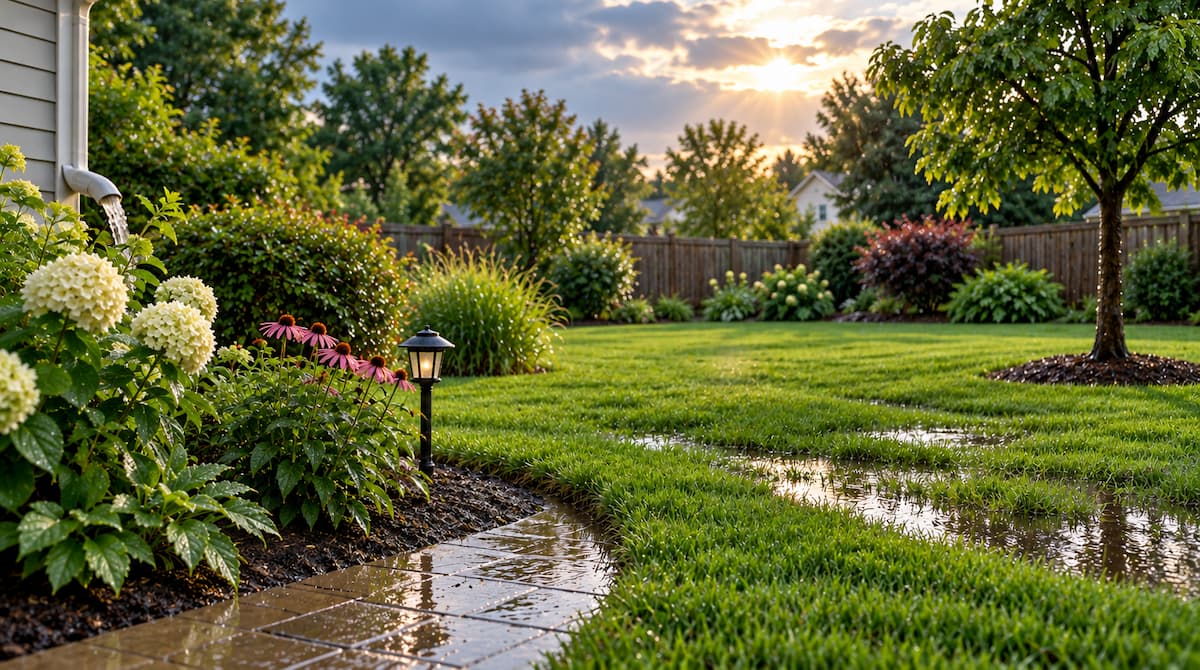
Beyond the Grass: How a Record Wet Summer Affected the Health of Your Whole Yard
The lawn is the first thing you notice after a wet summer. It is rarely the only thing affected.
Summer 2026 brought record rainfall to Fairfield County, where Bridgeport passed 21 inches between June and late August and broke a mark that had stood for more than 50 years. Westchester saw repeated flood warnings, and Central Park finished the season more than three inches above normal. Across both counties, storms dropped rain faster than the ground could absorb it, again and again, for three months.
That volume of water affects every part of a property: trees and shrubs, planting beds, hardscape, foundations, and the drainage systems that are supposed to tie it all together. Here is what to look for now, while fall gives you time to correct problems before winter.
Trees and Shrubs in Saturated Soil
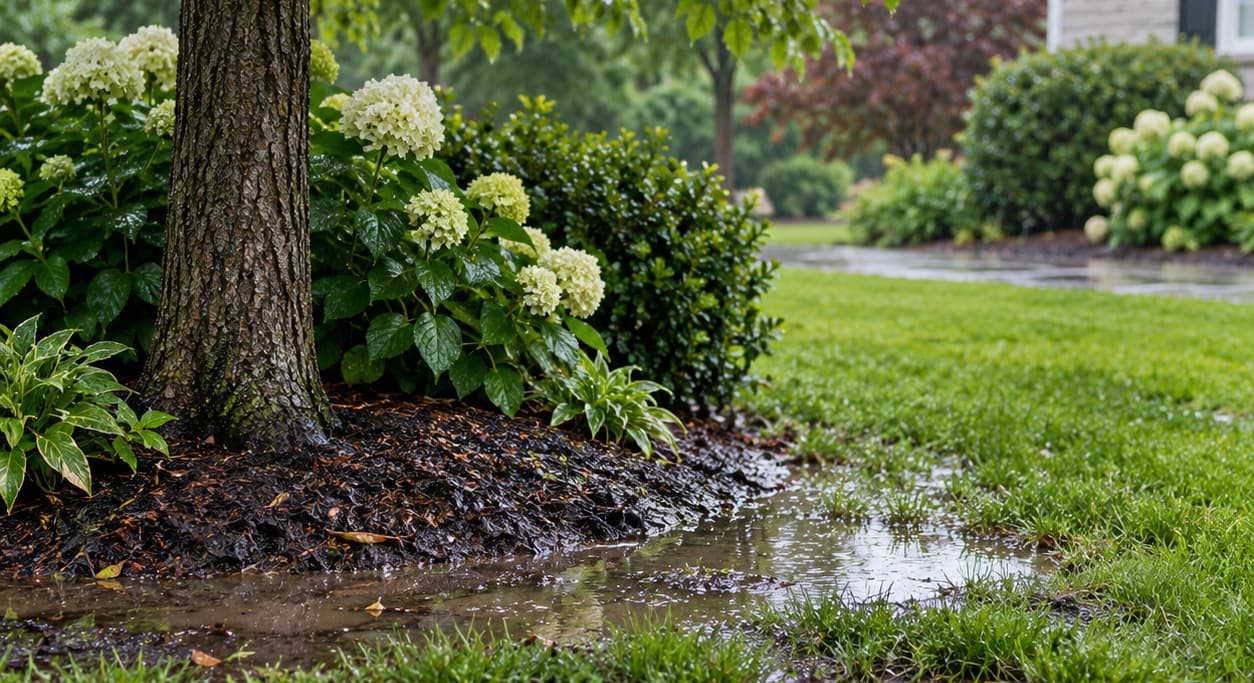
Tree roots need oxygen. When soil stays waterlogged for extended periods, fine feeder roots suffocate and die. The tree may not show it right away. Symptoms often appear weeks or months later as early leaf drop, yellowing, thinning canopy, or dieback at the branch tips.
Wet soil also weakens a tree’s anchor. Saturated ground holds roots less firmly, which is why we see healthy-looking trees topple in wind events that would not have moved them in a dry year. The August 13 storm that crossed the Connecticut shoreline just east of Fairfield County produced wind gusts estimated near 100 miles per hour, and trees came down on houses and cars. Trees in low-lying or poorly drained sections of your property are at higher risk through the fall storm season.
Shrubs face a different problem. Root rot caused by soil fungi such as Phytophthora spreads rapidly in wet conditions. Rhododendron, azalea, boxwood, yew, and arborvitae are all susceptible and all common across Westchester and Fairfield County landscapes. Look for branches that wilt or brown one section at a time while the rest of the plant looks fine. Once root rot is established, the fix is drainage, not fungicide.
Planting Beds and Mulch
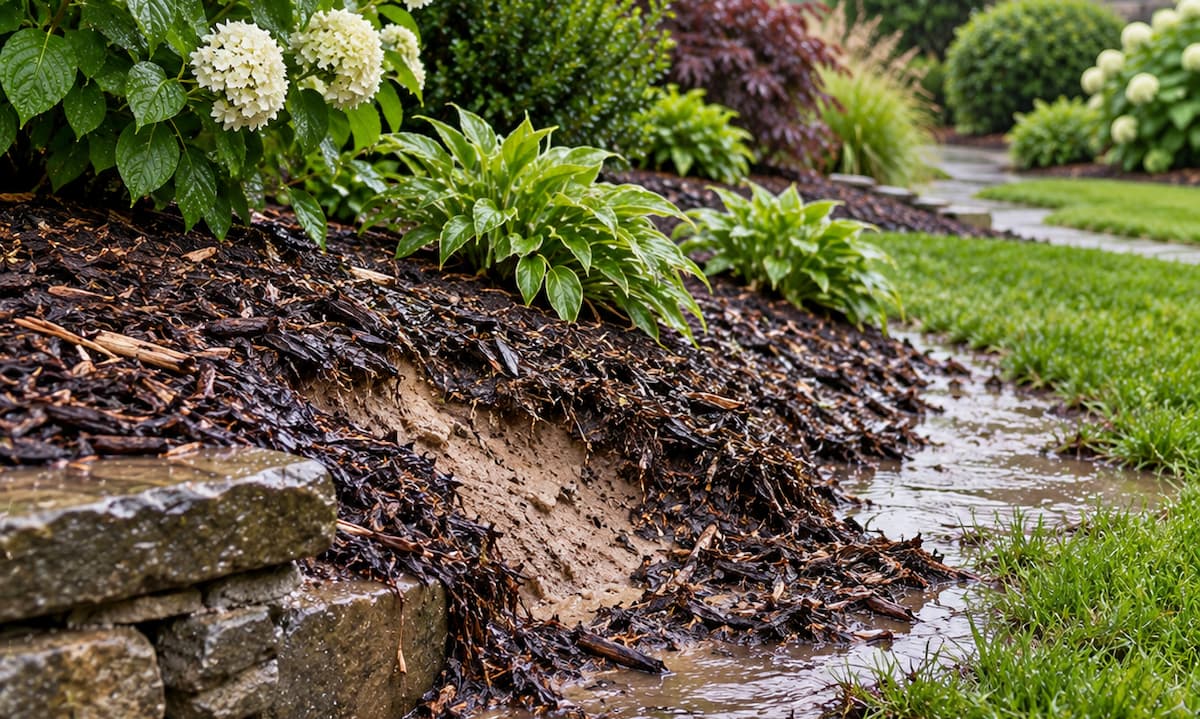
Heavy rain compacts bed soil and washes out mulch. Beds on slopes lose topsoil to erosion. Beds at the bottom of slopes collect that soil along with runoff and can end up several inches higher than they were in spring, which buries the crowns of perennials and the root flare of shrubs.
Mulch that stayed wet all summer breaks down faster and can develop a hard crust that sheds water instead of absorbing it. It also provides ideal habitat for slugs, fungus gnats, and artillery fungus, which shoots small black spores onto siding and cars.
This fall, rake back existing mulch, check that bed soil is level and that plant crowns are not buried, and refresh mulch to a depth of two to three inches, pulled back from stems and trunks.
Standing Water, Mosquitoes, and Ticks
Any spot that holds water for more than a few days is a mosquito breeding site. That includes low lawn areas, clogged gutters, saucers under planters, tarps, and the corrugated drain pipe that runs from downspouts and traps water in its ridges.
Wet summers also favor ticks, which need humidity to survive. Leaf litter, tall grass at property edges, and dense groundcover that stayed damp all season are prime tick habitat heading into fall, when adult blacklegged ticks are most active in our region. Keeping edges trimmed and leaf litter cleared reduces exposure.
Hardscape and Grading
Patios, walkways, and retaining walls all depend on drainage behind and beneath them. When the soil behind a retaining wall becomes saturated, hydrostatic pressure builds against the wall. Walls without adequate drainage can bow, crack, or fail. Check for new leaning, gaps between blocks, or soil washing out through the face.
Pavers set on a sand or stone base can settle or heave when the base becomes waterlogged. Look for low spots where water collects on the patio surface, pavers that rock underfoot, or joint sand that has washed out.
Grading matters most near the house. Soil should slope away from the foundation at least six inches over the first ten feet. Over time, soil settles and that slope disappears. A summer of heavy rain accelerates that settling and can reverse the grade, sending water toward the foundation instead of away from it.
Foundations and Basements
Homeowners across both counties dealt with wet basements this summer, many for the first time. Water entering a basement typically comes from one of three sources: surface water running toward the house because of grading, roof water dumped too close to the foundation by short downspout extensions, or groundwater rising because the soil around the foundation cannot drain.
The first two are landscape drainage problems. Extending downspouts, regrading, and installing drains that carry water away from the house solve most of them. The third requires a footing drain or interior system. In all three cases, the outdoor drainage work comes first, because it reduces the volume of water the foundation has to deal with.
Why the Soil Here Makes It Worse
Much of Westchester and inland Fairfield County sits on glacial till: dense, compacted soil with a high proportion of clay and stone. Northern Westchester and towns like Ridgefield, Wilton, and New Canaan also have shallow bedrock in many areas. Water that hits this ground either runs off or sits. It does not soak in quickly.
Closer to the Sound, soils are sandier and drain better, but many of those properties are also flatter and lower, with a high water table that rises during wet stretches.
Either way, properties in this region cannot rely on natural infiltration during a summer like the one we just had. They need designed drainage.
What a Drainage Plan Looks Like
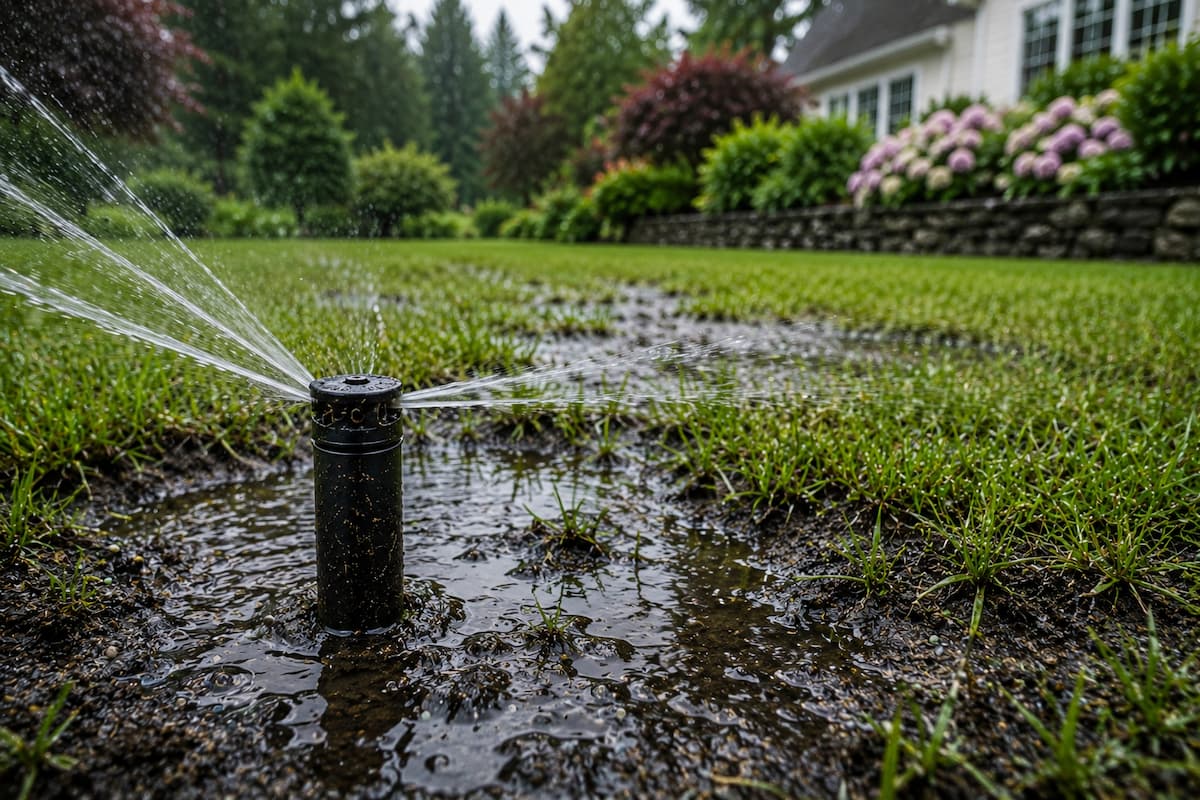
Effective landscape drainage is a system, not a single fix. Depending on the property, it may include:
- French drains to intercept subsurface water moving toward a low area or foundation and carry it to a discharge point.
- Channel drains across driveways and patios to catch surface runoff before it reaches the house.
- Catch basins in low spots, connected to underground pipe that carries water to a safe outlet.
- Dry wells to hold and slowly release water where there is no gravity outlet available.
- Downspout tie-ins that route roof water into the drainage system rather than dumping it at the foundation.
- Regrading to restore positive slope away from structures.
Our drainage solutions team evaluates the whole property, identifies where water comes from and where it goes, and designs a system that fits the site. Because we also design and install irrigation systems, we coordinate the two so that drainage work does not disturb existing sprinkler lines and irrigation zones are set correctly for areas where drainage has been improved.
Why Fall Is the Time to Do This
Drainage work involves trenching. That is easiest when the ground is workable and before it freezes, which in our area means September through November. Doing the work now also means the system is in place before spring snowmelt and rain, when many properties see their worst water problems.
Fall is also when you can see the evidence. Erosion channels, settled areas, standing water, and stressed plants are all visible right now. By spring, some of that will have been covered by leaves and snow.
Take stock now
Walk your property after the next heavy rain and note where water collects, where it runs, and where it ends up. Check trees for stability and canopy thinning. Look at shrubs for one-sided dieback. Check the grade at the foundation and the condition of any retaining walls. That inventory tells you where the problems are and how urgent they are.
Falco Lawn Sprinklers has designed irrigation and drainage systems for homeowners in Westchester County and Fairfield County for more than two decades. If this summer showed you where your property struggles with water, contact us or call (914) 287-2049 for a free drainage evaluation.